
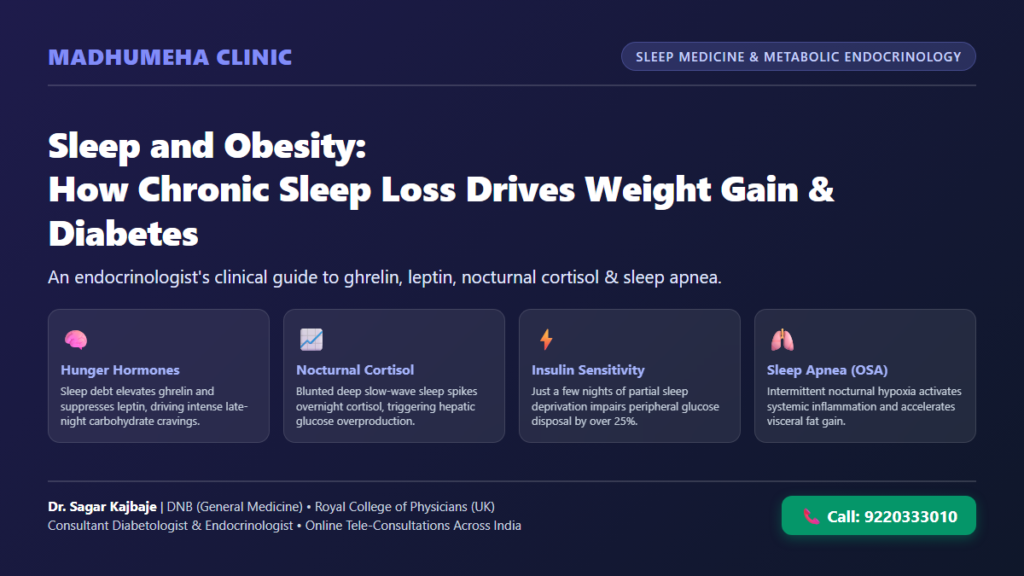
Sleep and Obesity: How Sleep Debt Drives Diabetes
Sleep restores metabolic balance. When patients struggle with stubborn weight gain, conversations often center on calories. Yet the biological connection between sleep and obesity deserves equal clinical scrutiny. Nightly debt accumulates very quietly. In my 15+ years practicing in Thane, I meet countless individuals who exercise regularly and eat carefully. Yet they struggle to lose a single kilogram. Frustration sets in quickly. They assume slow progress reflects personal dietary failure. In reality, chronic nocturnal sleep disruption dysregulates neuroendocrine signaling pathways and impairs cellular glucose disposal, preventing normal adipose fat oxidation throughout the entire metabolic system. Biology overrides willpower. Restorative rest governs how your brain senses satiety. It controls how adipocytes store excess lipids and how peripheral tissues respond to insulin. Hormones dictate hunger signals daily. Medical guidance begins with understanding the intricate hormonal regulation of appetite and weight before attempting another aggressive calorie restriction plan. Sound sleep heals metabolism. Sleep heals. Cells reset.
Neuroendocrine Pathways Connecting Sleep and Obesity
Appetite Hormones and the Endocannabinoid Surge
Appetite relies on chemical balance. When an adult sleeps fewer than six hours nightly, hypothalamic control centers register distress. The brain senses an acute state of energy deficit. Hunger surges without warning. Brains react. Appetites spike. The stomach accelerates orexigenic ghrelin synthesis. It sends urgent chemical messages demanding immediate caloric intake. Satiety signals drop simultaneously. Simultaneously, fat tissue downregulates anorexigenic leptin production. The brain fails to recognize fullness even after consuming large meals. Fullness never arrives. Stomachs ache. Cravings grow. Clinical trials prove that lack of sleep and obesity share common endocrine derangements. These pronounced hormonal derangements stimulate hypothalamic orexigenic pathways while blunting homeostatic satiety signals, disrupting normal appetite regulation across diverse patient populations. Cravings intensify toward late evening. Sleep deprivation stimulates the endocannabinoid system. It raises circulating levels of 2-arachidonoylglycerol, commonly known as 2-AG. Brain reward centers ignite. This chemical surge triggers hedonic hunger. It drives intense cravings for carbohydrate-dense comfort foods like fried snacks and sweets. Willpower cannot resist.
Adipose Dysfunction and Visceral Fat Expansion
Fat cells require regular rest. Recent metabolic research highlights how sleep and obesity interact through hypothalamic signaling pathways. These signals alter how adipocytes process and store incoming fatty acids. Healthy storage breaks down. Truncated sleep induces cellular insulin resistance within superficial subcutaneous fat depots across the human body. Lipids overflow into deep tissues. Unable to sequester triglycerides safely beneath the skin, the body redirects fats. It forces ectopic lipid deposition directly around internal organs, liver parenchyma, and skeletal muscle. Visceral belly fat expands. This pathological shift accelerates the metabolic risks of visceral fat accumulation. This ectopic distribution accelerates systemic low-grade vascular inflammation, increases atherogenic lipoprotein synthesis in the liver, and advances premature cardiovascular disease risk. Toxic fat fuels chronic disease. Evaluating how lack of sleep and obesity interact reveals deep cellular dysfunction in adipose tissue behavior. Fat accumulates quietly overnight.
The Direct Impact of Sleep on Obesity and Metabolism
Slow-Wave Sleep Loss and Sympathetic Hyperactivity
Deep slumber repairs tissues. During stage N3 slow-wave sleep, the anterior pituitary gland releases growth hormone. These pulsating bursts preserve lean muscle mass. Fragmented rest halts this release. Because sleep interruptions truncate deep slow-wave cycles, growth hormone output declines sharply throughout the night. Stress hormones surge unchecked. The autonomic nervous system remains in fight-or-flight overdrive. Unchecked nocturnal sympathetic activation persistently stimulates the adrenal cortex, driving pathological nighttime surges of circulating cortisol that disrupt normal circadian glucocorticoid rhythms. Cortisol floods circulation. Midnight cortisol surges prompt the liver to accelerate gluconeogenesis. The liver produces unnecessary glucose during overnight fasting hours. Morning sugar readings rise. Recognizing the impact of sleep on obesity shifts patients away from self-blame. Clinical guidance enables genuine physiological recovery. True recovery demands deep sleep.
How Lack of Sleep and Insulin Resistance Accelerate Weight Gain
Cells resist insulin signals. Scientific studies confirm that lack of sleep and insulin resistance develop concurrently after just a few nights of truncated rest in healthy adults. Muscle cells reject glucose uptake. Sleep deprivation impairs the translocation of glucose transporter type 4 proteins to skeletal muscle cell membranes. Bloodstream glucose stays high. To overcome this severe peripheral receptor barrier, the pancreatic beta cells hyper-secrete compensatory insulin, producing a sustained hyperinsulinemic environment that completely halts enzymatic lipolysis inside adipocytes. Fat burning stops. Storage continues. Weight climbs. Persistently elevated circulating fasting insulin securely traps triglycerides inside adipose tissue, effectively preventing motivated patients who pursue safe and sustainable weight loss with diabetes from mobilizing and oxidizing their stored body fat. Calories convert into storage.
The Bi-Directional Link Between Sleep and Diabetes
Blood Glucose Fluctuations and Beta-Cell Stress
Poor rest destabilizes glycemic control. Chronic nighttime sleep fragmentation disrupts whole-body glucose homeostasis by sustaining autonomous sympathetic stimulation, impairing postprandial glucose uptake, and increasing hepatic gluconeogenesis during early-morning hours. This demonstrates how sleep and diabetes amplify each other through reciprocal physiological pathways. Glucose levels swing wildly. When nocturnal awakenings spike sympathetic activity, free fatty acid flux rises across the portal vein. Pancreatic beta cells struggle. Chronically overworking vulnerable insulin-producing beta cells eventually causes premature secretory exhaustion, a dangerous metabolic decline that clinicians readily identify when tracking your 3-month HbA1c levels during routine quarterly clinical laboratory examinations. Values climb steadily. In my 15+ years managing metabolic disorders in Thane, addressing both sleep and obesity together produces the fastest improvements in glycemic control. Clinical outcomes improve rapidly.
Obstructive Sleep Apnea and Diabetes Complications
Airway collapse chokes breathing. Oxygen drops. Lungs strain. The relationship between obstructive sleep apnea and diabetes involves systemic inflammation. Repetitive upper pharyngeal airway collapse causes intermittent nocturnal hypoxia. Oxygen saturation falls repeatedly. Each hypoxic drop generates bursts of reactive oxygen species that damage delicate vascular endothelial lining. Cellular inflammation flares up. Cellular distress activates hypoxia-inducible factor 1-alpha and nuclear factor kappa B. These pathways trigger sustained releases of tumor necrosis factor-alpha and interleukin-6 into circulation. Inflammatory proteins impair insulin. This destructive systemic inflammatory cascade impairs hepatocyte insulin signaling and accelerates glycogenolysis, directly explaining the clinical link between obstructive sleep apnea and morning blood sugar spikes in heavy snorers. Continuous airflow restores breathing.
Authentic Clinical Case Vignettes from Madhumeha Clinic
Case Vignette: Mr Nitin Sawant (name changed) from Thane
Real patient stories reveal patterns. Mr Nitin Sawant (name changed), a 44-year-old senior software architect living in Thane, slept only four to five hours nightly due to late-night deployments. His waistline expanded steadily. Despite following a strict calorie-restricted diet and completing morning brisk walks, his abdominal circumference reached 102 centimeters. Fasting sugars climbed without pause. His morning fasting blood sugar reached 168 mg/dL, while laboratory tests revealed an HbA1c of 8.4%. Exhaustion clouded his workdays. During his initial evaluation at our clinic, Dr Sagar Kajbaje identified severe sleep debt alongside a high STOP-BANG screening score of 5. Diagnostic testing confirmed suspicions. A home polysomnography study confirmed moderate obstructive sleep apnea. His diagnostic home polysomnography revealed an apnea-hypopnea index of 22 events per hour, with recurrent oxygen desaturations triggering frequent nocturnal micro-arousals throughout the night. Sympathetic surges drove his sugars. Dr Sagar Kajbaje prescribed auto-titrating CPAP therapy alongside structured sleep hygiene. This helped Mr Nitin Sawant achieve seven continuous hours of restful sleep. Health returned within weeks. Over the next twelve weeks, he shed 5.8 kilograms of central visceral fat, his nighttime hunger disappeared, and fasting glucose dropped to 108 mg/dL. Energy returned fully. Metabolism stabilized. Control returned.
Case Vignette: Mrs Rekha Kulkarni (name changed) from Kalyan
Sleep loss fuels food cravings. Mrs Rekha Kulkarni (name changed), a 50-year-old school administrator from Kalyan living with type 2 diabetes, battled fragmented sleep and severe midnight insomnia. Nightly hunger overpowered her. Around eleven each night, she experienced intense carbohydrate cravings that drove her to eat biscuits and traditional sweets. Guilt followed every episode. She believed her stubborn weight gain and poorly controlled blood sugar resulted entirely from personal dietary failure. Clinical tests showed hormonal imbalances. Dr Sagar Kajbaje explained the neuroendocrine axis between sleep and obesity. Partial sleep restriction suppresses leptin while surging orexigenic ghrelin by over twenty percent. Chemical signals forced eating. Dr Sagar Kajbaje instituted a digital sundown protocol that eliminated screens ninety minutes before bedtime. He paired this with magnesium glycinate and consistent circadian scheduling. Restful sleep normalized appetite. Within ten weeks, her sleep efficiency reached 88 percent, her late-night sugar binges vanished, and her HbA1c plummeted from 8.8% to 6.9%. Balance replaced frustration. Sleep healed. Cravings stopped.
Clinical Protocol Matrix: Restoring Sleep Architecture for Metabolic Health
Evidence-Based Targets for Weight and Glycemic Control
Structured protocols deliver measurable results. Reversing the metabolic damage caused by sleep deficits requires addressing both neuroendocrine hormone signaling and upper airway patency through targeted interventions. Clinical targets require consistency. The clinical matrix below outlines how specific sleep disruptions impact metabolic parameters and details actionable protocols for lasting recovery.
| Sleep Parameter / Disturbance | Neuroendocrine & Biochemical Impact | Metabolic Consequence on Obesity & Diabetes | Clinical Target & Actionable Protocol |
|---|---|---|---|
| Sleep Duration (< 6 Hours Nightly) | Suppresses circulating leptin by 18%; increases orexigenic ghrelin by 24%; stimulates endocannabinoid 2-AG signaling | Triggers hedonic hunger, drives cravings for refined carbohydrates, and promotes ectopic visceral lipid deposition | Target 7 to 8 hours nightly; establish consistent sleep-wake times; avoid late caffeine after 2 PM |
| Slow-Wave Sleep (SWS) Deficit | Blunts pulsatile nocturnal growth hormone secretion; sustains sympathetic nervous hyperactivity and nighttime cortisol surges | Stimulates excess hepatic gluconeogenesis; causes peripheral insulin resistance via impaired skeletal muscle GLUT4 translocation | Deepen stage N3 sleep; maintain bedroom darkness below 5 lux; keep ambient bedroom temperature between 18°C and 21°C |
| Obstructive Sleep Apnea (AHI >= 15) | Repetitive airway collapse triggers intermittent hypoxia, re-oxygenation injury, reactive oxygen species, and NF-kB inflammatory cascades | Spikes inflammatory cytokines (TNF-alpha, IL-6); damages pancreatic beta cells; causes morning fasting hyperglycemia | Conduct home polysomnography; achieve auto-CPAP adherence for > 4 hours nightly; reduce pharyngeal fat through medical weight loss |
| Circadian Rhythm Disruption (Late Bedtimes / Shift Work) | Desynchronizes suprachiasmatic nucleus master clock from peripheral tissue clocks; suppresses pineal melatonin secretion | Promotes nocturnal free fatty acid flux; induces adipocyte insulin resistance; impairs pancreatic beta-cell insulin secretory timing | Implement a 90-minute pre-bed digital curfew; filter blue light; consume evening dinner at least 3 hours before retiring |
Frequently Asked Questions About Sleep and Metabolic Health
1. What is the biological connection between sleep and obesity?
Hormones link sleep and weight. The biological link between sleep and obesity stems from reciprocal hormonal signaling in the hypothalamus that regulates hunger, satiety, and energy expenditure. Short sleep elevates ghrelin. When sleep falls below seven hours, adipocytes downregulate leptin while the stomach overproduces ghrelin, driving continuous cravings for dense calories. Brain chemicals reward overeating. Rise in endocannabinoid signaling compounds this problem, prompting individuals to seek high-glycemic carbohydrates even when energy stores are full.
2. How does lack of sleep cause insulin resistance and type 2 diabetes?
Rest deprivation impairs receptors. Truncated sleep sustains nocturnal sympathetic nervous activation, causing late-night cortisol surges that stimulate the liver to pump out unnecessary glucose during fasting. Muscle cells resist glucose entry. Simultaneously, impaired intracellular GLUT4 glucose transporter translocation within skeletal muscle tissue prevents peripheral myocytes from absorbing circulating plasma glucose efficiently from the bloodstream. Blood sugars remain high. This biochemical sequence illustrates how lack of sleep and insulin resistance drive progressive beta-cell dysfunction, setting the stage for overt type 2 diabetes.
3. Can poor sleep directly cause intense cravings for sugary foods?
Sleep debt triggers cravings. Partial sleep deprivation alters cerebral reward processing by amplifying endocannabinoid 2-arachidonoylglycerol activity within the insular cortex and nucleus accumbens of the brain. Sweet snacks offer temporary relief. These pronounced neurochemical shifts selectively impair executive prefrontal self-control networks, driving nearly uncontrollable psychological urges for fast-digesting refined carbohydrates, processed bakery biscuits, and sweetened beverages. Tired minds crave sugar.
4. How is obstructive sleep apnea linked to weight gain and high blood sugar?
Airway blockages fuel inflammation. The clinical connection between obstructive sleep apnea and diabetes stems from repeated episodes of upper airway collapse that cause nocturnal intermittent hypoxia. Oxygen drops generate oxidative stress. These drops release reactive oxygen species that activate nuclear factor kappa B, triggering systemic inflammation and worsening peripheral insulin resistance. Morning sugar readings spike.
5. How many hours of sleep are medically necessary to prevent metabolic weight gain?
Adults require sufficient restful sleep. Clinical guidelines recommend seven to eight hours of uninterrupted slumber each night to maintain balanced appetite hormones and protect peripheral insulin sensitivity. Consistency supports biological clocks. Sleeping fewer than six hours or experiencing fragmented rest disrupts metabolic homeostasis, doubling the relative risk of developing central obesity. Quality sleep protects health. Rest heals vessels. Cells thrive.
Expert Metabolic Care at Madhumeha Clinic
Restoring metabolic health requires expertise. If chronic sleep fragmentation, nighttime cravings, or morning blood sugar spikes are holding back your health, professional clinical guidance can transform your life. Dr Sagar Kajbaje guides. Bringing 15+ years of clinical experience in endocrine care, Dr Sagar Kajbaje helps patients identify hidden sleep disorders and overcome stubborn weight challenges. His medical qualifications provide reassurance. Dr Sagar Kajbaje holds a DNB in General Medicine alongside a Post Graduate Diploma in Diabetes and Endocrinology from the Royal College of Physicians (UK). Detailed clinical evaluations uncover root causes. For in-person consultations, patients visit Madhumeha Clinic in Thane West for thorough metabolic assessments and diagnostic support. Distance presents no clinical barrier. To assist individuals residing across Maharashtra and India, our medical center provides convenient online diabetes tele-consultation appointments from the comfort of home. Take control of health. Contact our medical team directly: Call: 9220333010 or WhatsApp: 9220333010. Visit our clinic location. You can also view directions and find Madhumeha Clinic on Google Maps for your next scheduled consultation.
[…] reduces oxidative damage, and stabilizes morning fasting readings. Our clinical guide on healthy sleep architecture and metabolic health outlines why deep sleep stages protect cells. Uninterrupted rapid eye movement (REM) and slow-wave […]
[…] long-term diet compliance. Crash diets multiply these surges. Clinical research also demonstrates how poor sleep disrupts appetite hormones by increasing ghrelin and reducing leptin sensitivity within forty-eight […]
[…] insulin sensitivity. Chronic sleep debt is a potent driver of abdominal adiposity; exploring how sleep and obesity interact reveals why late nights stimulate visceral fat […]