
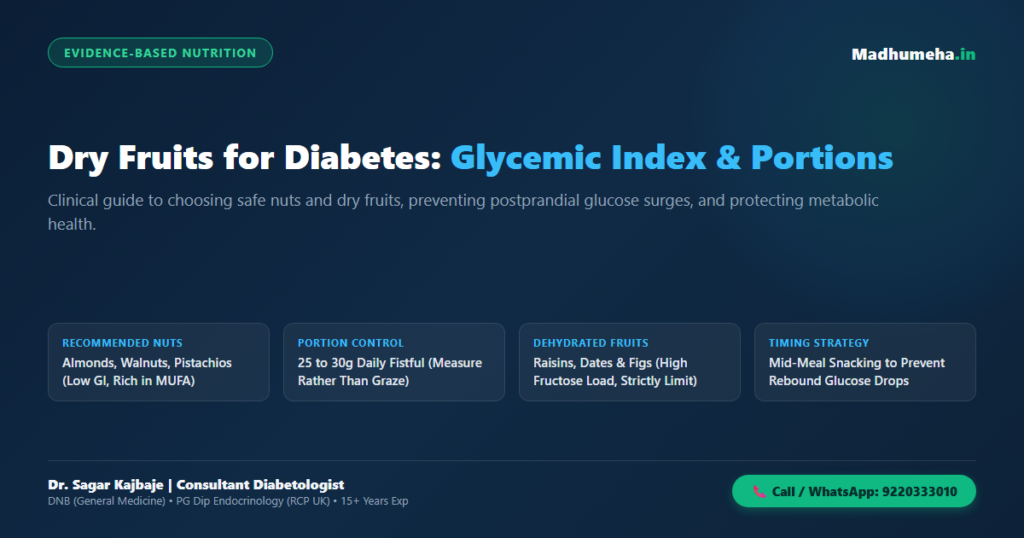
Which Dry Fruit is Good for Diabetes? Best Nuts & Rules
Patients sit in my consultation room at Madhumeha Clinic in Panchpakhadi, Thane West. They frequently pull out small snack boxes. They ask questions. Daily practice brings familiar questions. Someone places a glass jar on my desk and asks which dry fruit is good for diabetes. Portions govern sugar. Most families across Maharashtra group raw botanical tree nuts and sun-dried fruits under one single culinary label. Biochemistry rejects this. In human metabolic science, these two food groups behave like total opposites inside your bloodstream. Vessels demand protection. One group protects your vascular endothelium, whereas the other group floods your liver with rapid simple sugars. Portions dictate control. I treat patients across Thane and Kalyan. Many disciplined individuals present with erratic continuous glucose patterns. Dehydrated fruit caused their evening spikes. Let us establish clinical clarity on dry fruits and blood sugar control. For families managing type 1 diabetes in children, structured nut snacking provides long-lasting satiety without provoking unpredictable glycemic excursions.
## Can Diabetics Eat Dry Fruits: The Clear Separation of Nuts and Dehydrated Fruits
Patients often ask can diabetics eat dry fruits without causing rapid hyperglycemia. Food chemistry explains the outcome. Patients ask me which dry fruit is good for diabetes. They must recognize that botanical tree nuts contain negligible digestible carbohydrates.
### Tree Nuts Versus Sun-Dried Sugars: Glycemic Index Discrepancies
Botanical nuts represent dense reproductive seeds. Almonds, walnuts, pistachios, and hazelnuts contain high concentrations of monounsaturated fats, dietary fiber, plant sterols, and vegetable protein. Digestible carbohydrates stay low. Because of this high-fat, high-fiber matrix, raw tree nuts register a negligible glycemic index, usually under 15. Fat blunts spikes. Fiber delays absorption. Digestion takes time. Your digestive tract processes raw tree nuts slowly, releasing glucose into the portal circulation at a gentle pace.
Dehydrated dried fruits operate under completely opposite mechanics. Commercial raisins, dates, dried figs, and dried prunes start as fresh fruits with moderate water content. Commercial drying removes water. In fact, dehydration removes 70 to 80 percent of natural water volume from fresh fruit tissue. Sugar concentrates rapidly. This drying process concentrates simple fruit sugars, specifically glucose and fructose, by five-fold compared to fresh fruit weight. Consider fresh figs versus dried figs. A fresh fig weighs 50 grams with modest carbohydrates. Five dried figs pack over 30 grams of dense sugars into a tiny volume.
Fructose floods hepatocytes. Once absorbed, concentrated fructose enters your liver directly through the portal vein, bypassing early rate-limiting glycolytic checkpoints. Liver enzymes process fructose rapidly. This sudden sugar surge harms metabolism. It drives de novo lipogenesis and increases liver fat. Systemic insulin resistance worsens. Tree nuts build vascular defenses, whereas dehydrated fruits flood your system with dense sugar. Add tree nuts with care. Follow a structured strategic food sequencing order before main carbohydrate courses.
## Best Dry Fruits for Diabetic Patients: The Power of Tree Nuts
Deciding which dry fruit is good for diabetes requires evaluating how specific nutrients stimulate metabolic hormones. Raw tree nuts rank as the best dry fruits for diabetic patients. Their molecular profile supports pancreatic rest and improves peripheral glucose disposal.
### Almonds, Walnuts, and Incretin Hormone Signaling
Almonds stand out as an exceptional daily staple for glycemic stability. Almonds deliver dense nutrition. An ounce of almonds provides 6 grams of plant protein, 3.5 grams of fiber, and 14 grams of healthy fats. Oleic acid stimulates gut hormones. When monounsaturated fats reach the duodenum and jejunum, specialized enteroendocrine L-cells release glucagon-like peptide-1 (GLP-1) and cholecystokinin (CCK).
GLP-1 slows gastric emptying rate. This delayed stomach emptying prevents sudden surges of chyme from reaching the small intestine, flattening postprandial glucose curves. GLP-1 acts on pancreatic beta cells. It stimulates glucose-dependent insulin secretion and suppresses excess glucagon release from alpha cells. Nuts protect vessels.
Magnesium assists insulin. Almonds supply substantial amounts of elemental magnesium, offering approximately 75 milligrams per ounce. Magnesium acts as an obligatory cofactor for insulin receptor tyrosine kinase autophosphorylation. Magnesium deficiency hinders receptors. The insulin receptor cannot activate its signaling cascade, worsening cellular insulin resistance.
Walnuts bring a unique lipid architecture dominated by alpha-linolenic acid (ALA), a plant-based omega-3 polyunsaturated fatty acid. ALA suppresses arterial inflammation. Chronic low-grade inflammation within adipose tissue drives insulin receptor substrate-1 serine phosphorylation, which blocks glucose transporter type 4 translocation to muscle cell surfaces. Walnuts reduce vascular inflammation. Regular walnut consumption helps restore peripheral insulin sensitivity. Track sensor data carefully. Observing steady numbers after eating raw walnuts helps when understanding your HbA1c test results over three months.
## Clinical Benefits of Pistachio Nuts for Diabetes and Endothelial Health
Among all tree nuts, unsalted pistachios offer exceptional therapeutic advantages for both metabolic regulation and vascular tone. Pistachios offer clinical benefits. Using pistachio nuts for diabetes management improves arterial flexibility while controlling mid-meal hunger.
### L-Arginine, Nitric Oxide, and Satiety Mechanics
Pistachios contain one of the highest concentrations of the amino acid L-arginine among plant foods. L-arginine serves as the direct biochemical substrate for endothelial nitric oxide synthase (eNOS). Hyperglycemia damages blood vessels. Oxidative stress uncouples eNOS, reducing nitric oxide bioavailability. Nitric oxide loss constricts arterioles. Arterial stiffness increases and peripheral microvascular perfusion declines.
Vessels stay relaxed. Pistachios provide L-arginine and antioxidants. They restore nitric oxide generation, support perfusion, and lower peripheral vascular resistance.
Pistachios also offer a built-in behavioral barrier against overeating. In-shell pistachios require manual de-shelling before consumption. Shells slow eating. This physical process slows your eating speed, allowing gut satiety signals sufficient time to reach the hypothalamus. The accumulating pile of empty shells provides an immediate visual feedback signal regarding portion size. Busy executives need practical habits. Keeping in-shell pistachios at your desk provides smart glucose management for desk workers who need structured nutrition.
## Authentic Clinical Case Vignettes from Thane and Kalyan Practice
Clinical guidelines provide the scientific foundation, but real patient experiences demonstrate how targeted dietary changes change everyday glucose profiles.
### Real-World Glycemic Reversals Through Dietary Restructuring
Consider the case of Mr Mahesh Gokhale (name changed), a 56-year-old chartered accountant living in Naupada, Thane West. Mr Mahesh Gokhale (name changed) visited Madhumeha Clinic feeling discouraged. Evening blood sugar spikes frustrated him. He took metformin and sitagliptin consistently. Yet his glucose sensor alarmed between 7 PM and 9 PM, with readings climbing to 240 mg/dL.
During our clinical interview, I examined his daily dietary log. He considered all dry fruits healthy. Every evening, Mr Mahesh Gokhale (name changed) consumed a large bowl of raisins, dates, and cashews with tea. He consumed 60 grams of fast-acting sugar within twenty minutes. His sitagliptin could not counteract that massive, concentrated sugar bolus.
I restructured his evening routine immediately. We eliminated dehydrated raisins and dates entirely. I prescribed a measured 28-gram portion of raw soaked almonds and walnuts. He ate them thirty minutes before dinner. We also reviewed our guide to safe weight loss with diabetes to correct his overall energy surplus.
The physiological shift was rapid. Within four weeks, his evening post-meal glucose peaks flattened below 140 mg/dL. His morning fasting blood sugar dropped by 24 mg/dL. His HbA1c dropped from 8.1% to 7.0% in three months. Replacing dried fruits with raw tree nuts transformed his control.
Another illustrative case is Mrs Rekha Salve (name changed), a 50-year-old school vice-principal from Kalyan. Mrs Rekha Salve (name changed) presented with Type 2 Diabetes and central adiposity. She avoided nuts completely. Relatives warned her that dietary fats would clog her arteries and spike cholesterol.
To curb hunger between busy morning classes, Mrs Rekha Salve (name changed) snacked on puffed rice and refined wheat biscuits. These carbohydrates spiked insulin rapidly. Reactive hypoglycemic dips followed, leaving her exhausted and craving sugar by 3 PM. Her lipid panel revealed high triglycerides at 220 mg/dL and low HDL at 38 mg/dL. This reflected atherogenic dyslipidemia.
I explained the underlying vascular biochemistry to her. I prescribed measured pistachio nuts for diabetes control alongside raw walnuts. These replaced refined biscuits completely. Healthy fats stimulate incretins. Polyphenols improve vascular function without triggering reactive hypoglycemia. Her afternoon energy crashes ceased within twelve weeks. Triglycerides dropped to 160 mg/dL. Time in Range rose from 58% to 84%.
## Dry Fruits to Avoid in Diabetes: Why Dehydrated Fruits Spike Blood Sugar
Understanding what to omit from your kitchen cabinet is just as valuable as knowing what to include. Certain health foods pose hidden dangers. They represent prominent dry fruits to avoid in diabetes due to their extreme glycemic impact.
### Fructose Density, Liver Fat, and Postprandial Excursions
Raisins top the list of problematic dried fruits. Fresh grapes contain substantial moisture and fiber. When dehydrated into raisins, their volume shrinks dramatically while their total sugar content remains intact. Two tablespoons of raisins equal a whole bowl of grapes in sugar content. You consume them in seconds. Raisins carry a high glycemic index. Rapid glucose absorption triggers steep postprandial excursions.
Dates present a similar metabolic hazard for diabetic individuals. Dates provide potassium and fiber. However, two medjool dates contain 35 grams of fast-absorbing sugar. Many patients substitute dates for white sugar in sweets. That approach fails metabolically. Beta cells sense glucose directly. They make no distinction between cane sucrose and date sugar. Both trigger significant insulin demand.
Dried figs and dried apricots follow the same pattern. The dehydration process concentrates carbohydrates to roughly 60 percent of their final weight. Candied dry fruits represent an even greater danger. Commercial dried fruits hide added sugars. Manufacturers coat cranberries and cherries with corn syrup to enhance shelf life.
Avoid candied snacks. Always examine packaged labels carefully. Check ingredient labels carefully. If a label lists cane syrup or glucose glaze, leave it on the shelf.
## Structuring Nuts for Diabetic Patients: Portions, Soaking, and Timing
Choosing which dry fruit is good for diabetes requires strict portion discipline. Culinary preparation matters. Select nuts for diabetic patients with care. Pay attention to serving sizes and meal timing. Even the healthiest tree nuts can undermine weight management goals if eaten without discipline.
### Overcoming Phytates Through Water Soaking and Avoiding Calorie Traps
Raw tree nuts contain phytic acid and natural enzyme inhibitors within their outer brown skins. Phytic acid binds minerals in your gut. It chelates zinc, calcium, and magnesium into insoluble complexes. This chemical binding impairs mineral absorption across the enterocyte brush border.
Soaking removes phytates. Soak nuts in water overnight for 8 to 12 hours. Moisture activates phytase enzymes that degrade phytic acid complexes. This simple traditional step maximizes the bioavailability of intracellular magnesium and zinc while easing gastrointestinal digestion. peeling the softened brown skin after soaking reduces digestive tannin irritation for individuals with sensitive digestion.
Portions require strict boundaries. Because tree nuts contain dense, calorie-rich lipids, a generous handful can easily pack 200 to 250 calories. Mindless grazing carries risks. Eating from an open jar can easily add 600 excess calories daily. Excess calories become visceral fat. Hepatic and muscular insulin resistance worsens.
Weigh your food. Follow the palm rule. A measured 28 to 30 gram portion represents the ideal daily allowance for a diabetic adult. Divide this portion into two servings. Eat half in the morning and half as a pre-dinner snack.
## Clinical Protocol Matrix: Dry Fruit and Nut Selection for Diabetes
Patients evaluating which dry fruit is good for diabetes can follow this evidence-based clinical matrix to guide their grocery shopping and daily snacking choices.
### Evidence-Based Metabolic Recommendations
| Dry Fruit / Nut Variety | Biochemical Composition & Glycemic Load | Recommended Clinical Portion & Timing | Metabolic & Cardiorenal Action |
| :— | :— | :— | :— |
| Soaked Almonds & Walnuts | High oleic acid, alpha-linolenic acid, magnesium, dietary fiber; Glycemic Index < 15, Glycemic Load < 1 | 6 to 8 soaked almonds plus 2 whole walnuts (25 to 30g total), consumed during morning or 30 minutes before lunch | Enhances GLP-1 and CCK secretion, reduces postprandial glucose swings, and lowers vascular inflammation markers |
| In-Shell Pistachios & Hazelnuts | High L-arginine, lutein, gamma-tocopherol, monounsaturated lipids; Glycemic Index ~15, Glycemic Load ~1 | 20 to 25 in-shell pistachios (approx 25g edible portion), consumed during mid-afternoon tea time | Stimulates endothelial nitric oxide synthesis (eNOS), promotes vasodilation, and improves satiety via visual shell feedback |
| Cashews (Portion-Restricted) | Moderate monounsaturated fat, higher starch content (approx 30% carbohydrate by weight); Glycemic Index ~22, Glycemic Load ~3 | Strictly 4 to 5 raw or dry-roasted cashew nuts (maximum 15g), consumed alongside high-fiber meals | Provides satiety and copper, but requires strict limits to prevent carbohydrate buildup and excess calorie intake |
| Dehydrated Fruits (Raisins, Dates, Figs - High Caution) | Concentrated fructose and glucose, reduced water volume, depleted vitamin C; Glycemic Index 55 to 65, Glycemic Load > 18 | Avoid entirely as daily snacks; limited to emergency hypoglycemia rescue (15g carbohydrate equivalent) | Floods portal vein with rapid simple sugars, drives hepatic de novo lipogenesis, and triggers sharp postprandial glucose peaks |
## Frequently Asked Questions About Dry Fruits and Diabetes
Patients ask many practical questions during diabetes education sessions. Here are authoritative clinical answers to the most common queries.
### 1. Which dry fruits should diabetic patients strictly avoid?
Diabetic patients should avoid dehydrated high-sugar fruits including raisins, sultanas, commercial dried dates, dehydrated figs, dried prunes, and sweetened dried cranberries. These fruits undergo extensive dehydration that concentrates simple fruit sugars up to 65 percent by weight. When eaten, their high glycemic load produces rapid postprandial glucose spikes and triggers hepatic de novo lipogenesis. Identifying specific dry fruits to avoid in diabetes prevents sudden glycemic variability and protects vascular health. Additionally, steer clear of commercially processed nuts that feature sugar glazes, honey coatings, salt coatings, or deep-fried preparation in hydrogenated palm oils.
### 2. Can diabetics eat dry fruits daily, and what is the safe portion size?
Patients often ask can diabetics eat dry fruits daily without destabilizing morning fasting readings. Diabetics can eat raw or soaked tree nuts every single day, provided they observe strict portion boundaries. The safe, clinically proven portion size is 28 to 30 grams per day, which equates to roughly one small closed fist. This translates into 6 to 8 soaked almonds, 2 whole walnuts, and 10 to 12 in-shell pistachios. Consuming this measured quantity provides vascular protection and satiety without creating an excess calorie surplus that could promote weight gain. Always avoid eating directly from large containers to prevent unconscious overeating.
### 3. Are tree nuts like almonds, walnuts, and pistachios good for blood sugar control?
When evaluating which dry fruit is good for diabetes, raw tree nuts consistently provide the greatest glycemic stability. Whole tree nuts for diabetic patients slow gastric emptying and dampen glucose spikes. Tree nuts contain high concentrations of monounsaturated fatty acids, dietary fiber, plant sterols, and vegetable protein, while keeping digestible carbohydrates very low. When consumed before or alongside carbohydrate foods, their fat and fiber content delays gastric emptying and stimulates intestinal L-cells to release GLP-1. the magnesium in almonds improves insulin receptor sensitivity, while L-arginine in pistachios supports endothelial health and arterial flexibility.
### 4. How do dried fruits like raisins, dates, and figs impact insulin spikes?
Dried fruits trigger significant insulin spikes because the dehydration process removes water while concentrating simple sugars into small, easily consumed bites. When you eat raisins or dates, your digestive system absorbs their glucose and fructose rapidly through the intestinal wall. The resulting influx of sugar into the portal bloodstream forces pancreatic beta cells to oversecrete insulin to clear the glucose surge. Over time, these recurring postprandial peaks increase vascular oxidative stress and worsen underlying cellular insulin resistance.
## Expert Consultation & Clinic Details
Managing diabetes effectively requires personalized clinical guidance that accounts for your unique metabolic profile, lipid patterns, and daily lifestyle demands.
If you need structured dietary guidance or medical management for your diabetes, schedule an appointment with **Dr Sagar Kajbaje**, Consultant Diabetologist at **Madhumeha Clinic**. Dr Sagar Kajbaje holds a DNB in General Medicine and a prestigious Post Graduate Diploma in Diabetes and Endocrinology from the Royal College of Physicians (UK), bringing over 15 years of specialized clinical experience to patient care across Maharashtra.
For patients residing outside Thane or across India, we offer dedicated online diabetes tele-consultation services, providing the same detailed continuous glucose monitoring analysis and therapy adjustments from the comfort of your home.
Get in touch with our medical team today:
– Phone & WhatsApp: Call: 9220333010 or WhatsApp: 9220333010
– Clinical Practice Address: Madhumeha Clinic, Panchpakhadi, Thane West, Maharashtra
– Google Maps Location: Madhumeha Clinic on Google Maps
Take control of your metabolic health through science-backed nutrition and expert physician oversight. Measure your portions, choose tree nuts wisely, and protect your cardiovascular health every day.