
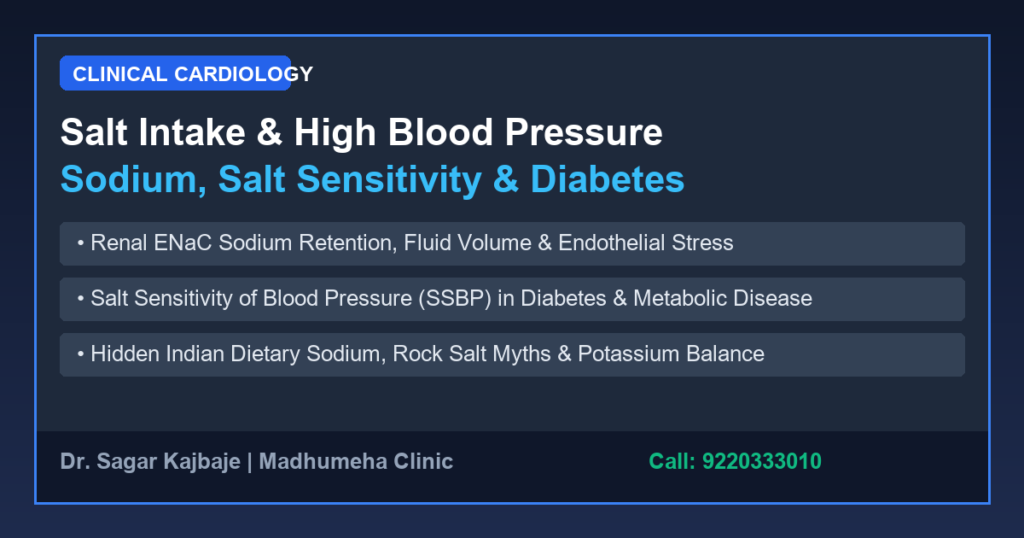
Salt Intake and High Blood Pressure: The Complete Guide
Cardiologists and nephrologists frequently emphasize the link between salt intake and high blood pressure during routine outpatient consultations. Salt enhances culinary flavor. Yet excessive sodium intake exerts intense mechanical strain on arterial walls across every single cardiac contraction cycle. Pressure climbs quietly. The intricate relationship between salt and hypertension extends far deeper than standard dietary folklore often suggests. Vessels react within hours. When someone consumes excess sodium, fluid shifts expand intravascular volume while small muscular arteries tighten through autoregulatory constriction. Persistent strain damages vascular tissues. For patients seeking managing high blood pressure alongside metabolic disorders, decoding this physiological connection provides true cardiovascular safety.
Sodium attracts fluid rapidly. That simple osmotic principle only scratches the surface of what actually happens inside human vascular smooth muscle. Arteries respond dynamically. At Madhumeha Clinic, we observe that dietary sodium alters endothelial function, renal transport channels, and central autonomic tone. High sodium blunts arterial relaxation. When muscular resistance vessels remain clamped down, the left ventricle pumps with greater force against resistance. Systemic vascular damage follows.
How Salt Affects Blood Pressure: Hemodynamics and Vascular Resistance
Understanding precisely how salt affects blood pressure requires an appreciation of fluid dynamics inside the human circulatory system. Sodium dominates extracellular fluid. When sodium accumulates in the intravascular space, osmotic forces draw water from intracellular spaces into the bloodstream. Circulating blood volume expands. The physiological link between salt intake and high blood pressure begins with renal volume regulation and fluid balance. Healthy kidneys excrete surplus. Guytonian principles demonstrate that renal pressure natriuresis normally raises urinary sodium excretion as systemic perfusion pressure rises. Balance breaks down. When dietary intake chronically overwhelms renal clearance capacity, baseline arterial pressure stays high to force sodium elimination.
Guytonian Pressure Natriuresis and Extracellular Volume Expansion
Kidneys regulate long-term arterial tone. Under healthy physiology, the pressure natriuresis curve permits large fluctuations in dietary sodium intake without producing substantial shifts in systemic pressure. Excessive sodium shifts equilibrium. Extracellular fluid volume expands rapidly as water follows the retained sodium into the vascular tree. Venous return increases. To protect capillary beds from hyperperfusion injury, peripheral arterioles constrict their muscular lumens across diverse vascular beds. Systemic vascular resistance jumps upward. The direct link between salt intake and high blood pressure converts simple fluid volume expansion into permanent vasoconstrictive hypertension across the entire body.
Endothelial Glycocalyx Breakdown and Arterial Stiffness
Sodium damages vascular walls. Beyond fluid dynamics, high sodium concentrations inflict direct structural injury on the delicate inner lining of blood vessels. Endothelial cells suffer. The endothelial glycocalyx coats healthy vascular linings, buffering mechanical shear stress from flowing blood cells. Excess sodium erodes glycocalyx. Intracellular sodium influx generates harmful reactive oxygen species that disrupt endothelial nitric oxide synthase, an enzyme abbreviated as eNOS. Nitric oxide levels plunge. Because nitric oxide stimulates arterial dilation, its depletion leaves vascular smooth muscle locked in constriction. Arteries stiffen permanently. This loss of vascular elasticity drives systolic pressure higher while generating wider, more damaging pulse wave velocities.
Sodium and Hypertension: Cellular Mechanisms Beyond Fluid Retention
Microvascular changes emerge early. Epidemiological research links dietary sodium and hypertension, yet many patients misunderstand how salt and hypertension interact cellularly. Nerves alter firing. High dietary sodium intake alters sympathetic nervous outflow, blunting central baroreceptor reflexes that normally stabilize arterial blood pressure. Electrochemical balances tilt dangerously. Inside smooth muscle cells, sodium-calcium exchangers falter, causing calcium ions to accumulate inside contractile cytoplasm. Intracellular calcium provokes continuous spasms. Arteriolar lumens narrow progressively, illustrating that sodium and hypertension are bound together by profound cellular pathology rather than simple fluid overload.
Dietary changes show results. Rigorous clinical investigations into salt intake and high blood pressure confirm that lowering daily sodium produces rapid drops in arterial pressure. Vessels recover quickly. Sodium restriction restores endothelial nitric oxide synthesis within weeks, improving systemic vascular compliance and protecting delicate microvascular networks from injury. Individual responses vary widely. Differences in renal tubular anatomy and genetic transport channel expression determine how strongly blood pressure responds to sodium.
Salt and Diabetes: Why Insulin Resistance Amplifies Sodium Retention
Metabolic disease magnifies risk. The physiological connection between salt and diabetes explains why patients with metabolic conditions suffer heightened cardiovascular risks across their lifespan. Insulin influences kidneys. When insulin levels remain high from insulin resistance, the hormone acts as a potent antinatriuretic signal. Tubules reclaim filtered sodium. When evaluating salt and diabetes, the relationship between salt intake and high blood pressure becomes even more pronounced. Fluid retention builds. For individuals focused on protecting cardiovascular and arterial health, curbing sodium delivers protection matching glucose control.
SGK1 Signaling and Distal Nephron ENaC Activation
Hormonal signaling alters tubular transport. High circulating insulin activates serum- and glucocorticoid-regulated kinase 1, known as SGK1, inside epithelial cells lining the distal renal nephron. Activated SGK1 halts degradation. By phosphorylating ubiquitin ligase Nedd4-2, SGK1 prevents the normal degradation of epithelial sodium channels, abbreviated as ENaC. ENaC abundance surges. These open channels allow excessive sodium reclamation from tubular fluid back into the bloodstream along the cortical collecting duct. Cotransporters accelerate sodium uptake. Concurrently, SGK1 upregulates thiazide-sensitive sodium-chloride cotransporters in the distal tubule, compounding renal salt retention. Pressure natriuresis curves shift rightward. Because the kidney retains salt with stubborn tenacity, small increases in dietary sodium provoke sharp, exaggerated blood pressure spikes.
Glomerular Hyperfiltration and Diabetic Kidney Risk
Glomerular capillaries face pressure. Renal sodium retention does not just raise systemic numbers; it directly threatens long-term nephron filtration structure and survival. Hyperfiltration accelerates injury. Excess sodium impairs tubuloglomerular feedback, causing afferent arterioles to dilate while efferent arterioles stay constricted. Intraglomerular pressure climbs to dangerous levels. Over time, mechanical wall stress causes podocyte detachment and accelerated albumin leakage across the damaged glomerular basement membrane barrier. Filtration capacity gradually declines. Controlling sodium protects delicate microvascular networks, slowing the progression of diabetic kidney disease and glomerular filtration failure.
Clinical Case Study: Salt Sensitive Hypertension in Type 2 Diabetes
Hidden sodium sabotages clinical therapy. Consider Mr Dilip Shah (name changed) from Thane, a 56-year-old textile merchant with longstanding type 2 diabetes and resistant hypertension. Prescriptions brought poor control. Mr Dilip Shah showed an office blood pressure of 158/94 mmHg despite taking three distinct antihypertensive medications every morning. He felt puzzled. He insisted during his initial evaluation that he rarely added a single grain of raw salt to his meals. Dietary history revealed surprises. During consultation at Madhumeha Clinic, Dr Sagar Kajbaje conducted a nutritional recall examining his true sodium intake. Traditional snacks harbored massive sodium. The recall revealed daily intake of two roasted papads, commercial mango pickle, salted fafda, and restaurant curries. Daily sodium surpassed guidelines. His total daily sodium intake exceeded 4,800 mg, representing the equivalent of twelve grams of dietary salt.
Insulin resistance compounded retention. Underlying hyperinsulinemia from insulin resistance had activated Mr Dilip Shah’s renal ENaC channels, precipitating severe salt sensitive hypertension. Kidneys retained fluid. Dr Sagar Kajbaje initiated 24-hour ambulatory blood pressure monitoring, revealing a nocturnal non-dipping pattern characteristic of sodium overload. Dietary modifications began immediately. Dr Kajbaje instituted a sodium de-escalation protocol, replacing pickles with fresh lemon juice, cumin seeds, and coriander. Urinary sodium excretion normalized steadily. Within eight weeks, his systolic blood pressure dropped by 18 mmHg, settling comfortably at 128/82 mmHg without new drugs. Medication burdens decreased safely. Seeing his stabilized arterial readings, his nephrologist successfully deprescribed one diuretic medication from his daily treatment schedule.
The Sodium-to-Potassium Ratio: The Overlooked Cardiovascular Risk Marker
Electrolyte balance requires harmony. Cardiovascular disease risk does not depend on dietary sodium in isolation from other foundational dietary minerals. Potassium counterbalances sodium. Ancestral humans consumed diets rich in potassium, whereas modern processed foods heavily invert this protective biological ratio. Potassium triggers natriuretic reflexes. Dietary potassium stimulates the renal kallikrein-kinin system, encouraging the kidneys to release excess sodium into the urine. Vascular smooth muscle cells relax. Potassium ions hyperpolarize vascular smooth muscle via inward rectifier channels, decreasing arterial tone and vascular resistance. Ratios predict outcomes. Large prospective clinical registries indicate that a high urinary sodium-to-potassium ratio predicts stroke and heart attacks far more reliably than sodium alone.
Nephrons respond to potassium. When plasma potassium concentrations rise, the distal nephron downregulates sodium-chloride cotransporters to hasten sodium elimination. Arterial stiffness subsides. Adopting fiber-first meal planning strategies boosts potassium by incorporating dark leafy greens, lentils, and seeds into meals. Dietary fiber provides synergy. This coordinated nutritional approach restores vascular elasticity while smoothing glycemic curves after carbohydrate consumption.
The Myth of Rock Salt and Black Salt Blood Pressure Safety
Wellness trends mislead patients. Many patients ask whether switching to black salt blood pressure benefits exist in real clinical practice. Marketing claims proliferate. Online claims assert that Himalayan pink salt or black salt, known as kala namak, spares the vascular system. Chemistry debunks these claims. Refined table salt, Himalayan pink rock salt, and black salt all consist almost entirely of pure sodium chloride. Sodium concentrations remain remarkably similar. Chemical assays prove that sendha namak and black salt contain ninety-six to ninety-eight percent sodium chloride. Minerals remain negligible. The trace iron and sulfur compounds that impart pink and grey hues account for less than two percent of total salt mass.
Stomach acids dissolve minerals. Once ingested, sodium ions dissociate completely in gastrointestinal secretions regardless of the salt crystal source or geologic origin. Arteries feel sodium. Vascular endothelial cells and renal tubules react identically, experiencing the same osmotic volume expansion and glycocalyx breakdown. False reassurance encourages liberal consumption. Believing that rock salt is harmless leads patients to consume excessive amounts, precipitating unexpected blood pressure spikes.
Clinical Case Study: The Pink Himalayan Salt Misconception
Misconceptions trigger clinical crises. This hazard was demonstrated by Mrs Anjali Gokhale (name changed) from Kalyan, a 62-year-old retired bank auditor managing stage 1 hypertension. She changed seasonings. After viewing popular wellness videos, Mrs Anjali Gokhale discarded her iodized table salt and bought pink Himalayan rock salt. She seasoned food with abandon. Believing rock salt possessed therapeutic qualities, she sprinkled sendha namak across raw salads, curd bowls, and daily herbal decoctions. Blood pressure escalated quietly. Her home blood pressure monitor showed progressive increases, eventually climbing to 152/90 mmHg with mild bilateral ankle swelling.
She sought guidance. During her consultation at Madhumeha Clinic, Dr Sagar Kajbaje reviewed the chemical stoichiometry of alternative salts with her. Calculations revealed excess intake. Her daily intake of sendha namak supplied over 4,200 mg of sodium straight into her vascular tree. Dr Kajbaje redesigned her meals. She transitioned to a potassium-rich framework featuring fresh spinach, bananas, lentils, and garlic seasonings without added salt. Sodium limits were enforced. Her total sodium intake was capped under 1,500 mg daily through measured meal preparation at home. Swelling resolved promptly. Within ten weeks, her ankle edema disappeared and her blood pressure settled comfortably at 122/78 mmHg.
Hidden Sodium Sources in the Traditional Indian Diet
Shakers disguise true exposure. Most dietary sodium in traditional Indian households does not originate from the visible salt shaker on dining tables. Condiments harbor sodium. Traditional mango, lime, and chili pickles rely on heavy sodium chloride concentrations to prevent spoilage and preserve stability. Single servings deliver massive quantities. One modest tablespoon of commercial achaar can easily contribute over six hundred milligrams of sodium in seconds. Papads contribute chemical sodium. Manufacturers add sodium benzoate and alkaline papad khar for crispness, loading each serving with invisible dietary sodium.
Bakery snacks deceive. Packaged breads, breakfast rusks, and tea biscuits contain high sodium loads from chemical leavening agents and baking soda. Savory namkeens exacerbate exposure. Fried farsan, salted mixture, and packaged chips add immense sodium loads without registering as salty to desensitized tastebuds. Restaurant gravies multiply daily intake. Managing salt intake and high blood pressure requires vigilance beyond simply throwing away the tabletop shaker during meals.
Evidence-Based Sodium and Potassium Management Protocol
Below is a clinical protocol matrix summarizing the vascular mechanisms, systemic impacts, and evidence-based interventions for sodium management:
| Dietary / Clinical Parameter | Biochemical & Vascular Mechanism | Impact on Blood Pressure & Organs | Actionable Daily Dietary Strategy |
|---|---|---|---|
| Excess Sodium Intake (> 2,000 mg/day) | Expands extracellular fluid volume and uncouples endothelial nitric oxide synthase (eNOS), increasing reactive oxygen species. | Increases systemic vascular resistance, raises systolic blood pressure, and induces arterial wall stiffening. | Cap total daily salt intake under 3.75 grams (1,500 mg sodium); replace table salt with fresh herbs, lemon juice, and roasted spices. |
| Salt Sensitivity in Diabetes (ENaC Activation) | Hyperinsulinemia triggers SGK1 phosphorylation, upregulating distal nephron ENaC channels and NCC cotransporters. | Impairs renal pressure natriuresis, causing fluid retention and exaggerated blood pressure surges in response to dietary salt. | Improve insulin sensitivity through low-glycemic dietary planning; monitor blood pressure at home; consider targeted ENaC-blocking therapy if indicated. |
| Low Potassium Intake (< 3,500 mg/day) | Deprives vascular smooth muscle of inward rectifier K+ channel hyperpolarization and downregulates renal kallikrein-kinin activity. | Elevates the urinary sodium-to-potassium ratio, compounding arterial constriction and accelerating cardiovascular event rates. | Consume potassium-dense whole foods including steamed spinach, drumsticks, lentils, coconut water, and unsalted seeds daily. |
| Hidden Indian Dietary Sodium (Pickles / Papads) | Concentrated sodium chloride and chemical preservatives (sodium bicarbonate) deliver massive bolus sodium loads to the bloodstream. | Causes sudden intravascular fluid shifts, blunts nocturnal blood pressure dipping, and provokes dependent peripheral edema. | Eliminate commercial pickles, papads, chutneys, and packaged bakery snacks; substitute with fresh curd, roasted cumin, and mint chutney prepared without salt. |
Frequently Asked Questions About Salt and Blood Pressure
Does salt cause high blood pressure?
Decades of large-scale clinical trials prove that excessive salt intake and high blood pressure have a direct cause-and-effect link. Sodium expands intravascular fluid. High sodium intake forces the kidneys to retain water, expanding circulating blood volume and elevating cardiac output. Arteries constrict defensively. Simultaneously, sodium degrades the endothelial glycocalyx and suppresses nitric oxide, producing widespread arterial stiffness over time.
How does salt increase blood pressure in the body?
Osmotic forces shift fluid. When sodium enters the bloodstream, osmotic pressure draws water from surrounding cells into the vascular compartment. Blood volume rises. To protect delicate capillary beds from volume surges, small muscular arterioles constrict across multiple organs simultaneously. Vascular resistance jumps upward. Additionally, sodium stimulates sympathetic output and increases intracellular calcium inside smooth muscle, sustaining high blood pressure.
Does rock salt (sendha namak) or black salt raise blood pressure like table salt?
Yes, they do. Rock salt and black salt raise blood pressure just as aggressively as standard iodized table salt. Sodium content remains identical. Chemical analysis proves that pink rock salt and black salt contain ninety-six to ninety-eight percent sodium chloride. Trace minerals mislead. The trace minerals responsible for pink or dark hues represent less than two percent of total mass, providing zero vascular protection.
Why are people with type 2 diabetes more sensitive to salt?
Insulin resistance alters kidney function. Individuals with type 2 diabetes maintain high circulating levels of insulin, which acts as a potent antinatriuretic hormone. Insulin activates SGK1 pathways. This stimulation upregulates epithelial sodium channels and cotransporters in the distal nephron, blocking normal urinary sodium excretion. Sodium retention intensifies. Because of this defect, even modest amounts of dietary sodium trigger dramatic blood pressure spikes in patients living with metabolic disorders.
Clinical Consultation and Dedicated Care at Madhumeha Clinic
Vascular damage progresses silently. Unchecked blood pressure accelerates microvascular and macrovascular complications across the brain, heart, and kidney filtration networks. Expert care helps. If you struggle with resistant blood pressure or high blood sugar, clinical guidance provides a clear path forward.
Personalized care improves outcomes. Consult with Dr Sagar Kajbaje for evidence-based hypertension management and metabolic care in a dedicated clinical setting. Extensive clinical experience guides therapy. Dr Sagar Kajbaje holds a DNB in General Medicine and a Post Graduate Diploma from the Royal College of Physicians (UK). He brings over fifteen years of clinical experience to complex cardiometabolic disorders. Remote access is available. For patients seeking remote care, we provide online diabetes tele-consultation services across Maharashtra and all regions of India.
Connect with our team:
– Official Website: Visit Madhumeha Clinic for educational resources and scheduling.
– Direct Appointment Contact: Call: 9220333010 or WhatsApp: 9220333010 to speak directly with our reception.
– Clinic Directions: Find Madhumeha Clinic on Google Maps for straightforward navigation to our Thane location. To monitor the positive vascular benefits of reducing dietary sodium, follow standardized steps on how to check your blood pressure at home across seven consecutive days.