
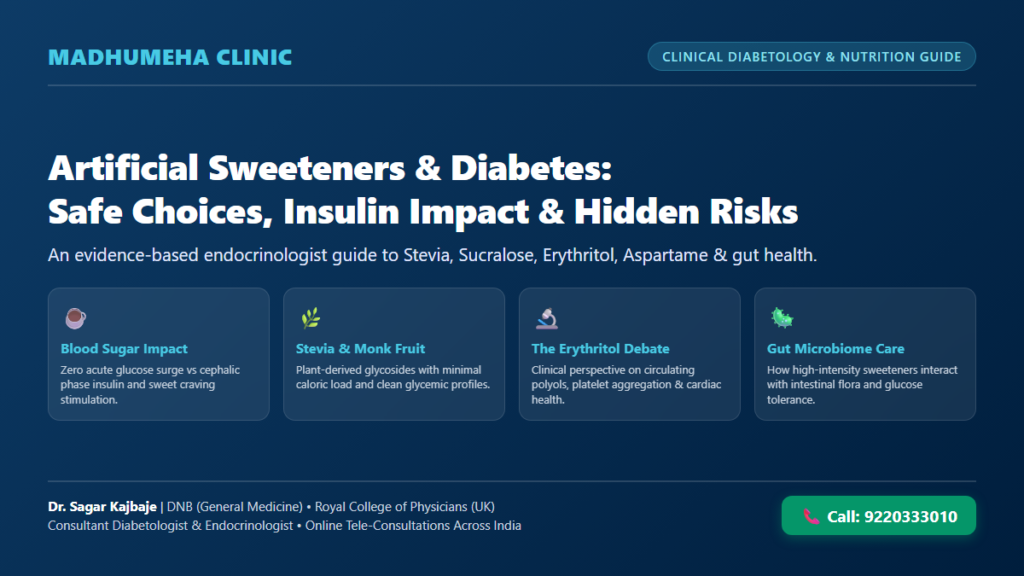
Artificial Sweeteners and Diabetes: Safety & Best Choices
For many patients walking into our Thane consultation room, giving up morning tea with sugar feels like losing an old friend. Tongues naturally crave sweetness after decades of routine, so turning to sugar substitutes seems like an effortless way to protect blood sugar levels. Yet the relationship between artificial sweeteners and diabetes involves intricate physiological responses extending far beyond simple calorie subtraction. The clinical relationship between artificial sweeteners and diabetes involves much more than simply swapping out sucrose calories for chemical sweetness. Sweetness alters metabolism. Zero-calorie table sweeteners prevent immediate glucose surges. However, their long-term influence on gut microbes, cephalic signals, and cardiovascular tissues demands careful medical evaluation. Decisions require clarity. Sustainable glycemic stability starts with improving baseline insulin sensitivity. Real recovery avoids endless dependence on synthetic powders.
Can Diabetics Eat Artificial Sweeteners as Part of Daily Life?
Lingual Receptors and Cephalic Phase Insulin Response
Tastebuds react instantly. Sweet molecules touch the tongue. Specialized T1R2 and T1R3 taste receptor proteins activate neural pathways that notify the brain about incoming calories. Saliva flows freely. This anticipatory mechanism represents the cephalic phase response. It prompts the endocrine pancreas to prepare small amounts of baseline insulin for incoming carbohydrates. Signals mismatch reality. Non-nutritive sweeteners provide intense sensory pleasure without providing real glucose molecules for cells to absorb. Hunger returns quickly. Anticipated glucose never arrives. Appetite centers in the brain remain active, prompting stubborn cravings later in the afternoon. Appetite fluctuates unpredictably. Many patients ask our medical team: can diabetics eat artificial sweeteners without compromising their long-term glycemic control? Moderation provides balance. Consuming multiple daily sweetener packets trains taste receptors to demand exaggerated sweetness from everyday home meals.
How Artificial Sweeteners Blood Sugar Dynamics Function in Digestion
When you consume standard white cane sugar, intestinal enzymes quickly dismantle sucrose into glucose and fructose, causing an immediate rise in blood sugar. In contrast, artificial sweeteners blood sugar dynamics remain flat on immediate post-meal glucometer checks because human digestive enzymes cannot break their synthetic chemical bonds. Human salivary and intestinal amylases cannot dismantle synthetic chlorinated bonds. Readings appear steady. A patient checking a fingerstick capillary reading thirty minutes after drinking diet soda will notice zero immediate elevation. Numbers tell fragments. Evaluating metabolic health requires looking beyond thirty-minute glucometer readings. Focus on understanding your HbA1c targets over three consecutive months. Chronic exposure matters. Subtle hormonal shifts and microbial adaptations can quietly alter peripheral glucose disposal over time.
Biochemical Breakdown of Common Non-Nutritive Sweeteners
Steviol Glycosides, Sucralose, Aspartame, and Acesulfame Potassium
Understanding how different sweeteners behave inside the body requires looking at their chemical structures. Stevia comes from the Stevia rebaudiana plant, containing sweet glycosides like Rebaudioside A that deliver nearly three hundred times the sweetness of sugar. Colonic bacteria ferment the glycoside backbone into free steviol before excretion. Sucralose behaves quite differently. Manufacturers chlorinate sucrose by substituting three hydroxyl groups with chlorine atoms. This creates trichlorosucrose that tastes six hundred times sweeter than table sugar. Tissues eliminate sucralose. Less than fifteen percent enters circulation, while the rest leaves the bowel unchanged. Heat destroys aspartame. Aspartame combines aspartic acid and phenylalanine methyl ester. It offers two hundred times sweetness but degrades rapidly into bitter components at baking temperatures. Acesulfame adds stability. Food manufacturers often pair acesulfame potassium with sucralose to mask lingering bitter notes. Polyols demand attention. Erythritol belongs to the sugar alcohol family as a four-carbon polyol, providing seventy percent sweetness while causing less digestive distress than sorbitol or maltitol. Stomach comfort varies. Review the digestive tolerance of sugar alcohols to avoid troublesome abdominal bloating and osmotic diarrhea.
The Gut Microbiome Axis: Microbial Diversity and Glucose Tolerance
Colonic Dysbiosis and Short-Chain Fatty Acid Disruption
Trillions of symbiotic bacteria inhabit the human colon. They ferment dietary fiber into beneficial short-chain fatty acids like butyrate and propionate to maintain intestinal wall integrity. When examining artificial sweeteners and diabetes, clinicians evaluate how synthetic compounds influence this delicate microbial ecosystem over time. Emerging research indicates that heavy intake of sucralose and saccharin suppresses protective strains like Bifidobacterium and Akkermansia muciniphila. High daily consumption of sucralose or saccharin reduces beneficial Bifidobacterium and Akkermansia muciniphila in the colonic epithelium. Inflammation rises slowly. When protective bacterial strains diminish, intestinal wall permeability increases. Microscopic bacterial endotoxins enter the portal bloodstream. Liver tissues react. Hepatic inflammation blunts insulin receptor signaling. This creates indirect glucose intolerance despite zero dietary carbohydrates. Flora need nourishment. Real metabolic recovery requires supporting healthy gut bacteria. Choose polyphenol-rich whole foods, dietary fiber, and adequate hydration rather than sterile chemical powders.
Untangling Erythritol and Diabetes Cardiovascular Evidence
The Pentose Phosphate Pathway, Circulating Biomarkers, and Thrombosis
Cardiology headlines shocked. Recent clinical research regarding erythritol and diabetes revealed striking statistical associations between high blood polyol levels and major adverse cardiovascular events. Blood platelets coagulated. Laboratory experiments demonstrated that high circulating plasma concentrations of erythritol accelerated platelet reactivity. Clotting potential increased in experimental models. Context clarifies mechanics. Patients managing cardiovascular risks associated with diabetes should examine how the body produces erythritol endogenously. Glucose creates polyols. Human liver cells produce small amounts of erythritol from glucose via the pentose phosphate pathway during periods of high oxidative stress. High readings warn. High plasma erythritol marks underlying metabolic distress. Massive dietary intake from processed keto baked goods adds unnecessary vascular strain. Caution protects vessels. Moderating packaged keto treats while focusing on natural whole foods protects arterial function without inducing panic.
What Is the Safest Artificial Sweetener for Diabetics?
Balancing Thermal Stability, Purity, and Individual Tolerance
When evaluating the safest artificial sweetener for diabetics, clinicians examine chemical stability, purity, and digestive tolerance rather than promotional marketing claims. High-purity stevia leaf extract and monk fruit mogrosides demonstrate superior safety profiles. Plant glycosides pass through metabolic pathways without generating harmful byproducts. Plant-derived glycosides pass through metabolic pathways without generating toxic intermediates. Additives dilute benefits. Commercial manufacturers blend active sweetener with bulking powders like maltodextrin to fill individual packets. Bulking agents spike. Maltodextrin carries a very high glycemic index, producing unexpected glucose spikes in trusting patients. Liquid formulations protect. Select pure liquid drops or check ingredient labels. This ensures zero hidden corn syrups or starches dilute your health goals.
Choosing a Natural Sweetener for Diabetics with Clinical Guidance
Whole Plant Extracts Versus Ultra-Processed Sugar Substitutes
For patients who prefer plant-based alternatives, selecting a natural sweetener for diabetics often leads to monk fruit extract, known botanically as Siraitia grosvenorii. The active components called mogroside V deliver three hundred times the sweetness of table sugar while contributing zero calories and zero carbohydrate load. They contribute zero calories and zero carbohydrates. Whole spices enhance. Integrate natural kitchen spices like green cardamom, ground cinnamon, and freshly crushed ginger directly into structured diabetic meal planning. Spices warm palates. Herbs soothe. Fragrant aromatics satisfy sensory expectations for comfort without requiring continuous synthetic powders in your morning chai. Retraining tastes works. Over several weeks of progressive reduction, taste receptors adapt naturally, allowing subtle flavors of whole foods to shine through beautifully.
The 2023 WHO Guideline: Weight Management Versus Diabetes Care
Short-Term Harm Reduction Versus Permanent Sweetener Reliance
Guidelines sparked debate. In 2023, the World Health Organization advised against using non-sugar sweeteners for long-term weight control or disease prevention. Meta-analyses revealed concerns. Clinical trials showed no lasting body fat reduction. Observational data showed weak links to cardiovascular risks. Diabetes requires distinction. In clinical practice, the World Health Organization noted that this guidance applies primarily to non-diabetic populations seeking cosmetic weight loss. Harm reduction matters. For patients with established type 2 diabetes, replacing table sugar with safe substitutes provides a useful temporary bridge during meals. Palates need retraining. Public health discussions on artificial sweeteners and diabetes emphasize that chemical sweetness cannot replace wholesome dietary patterns.
Authentic Clinical Vignettes from Madhumeha Clinic
Case Vignette: Mrs Meena Iyer (name changed) from Thane
At Madhumeha Clinic in Thane, I frequently meet patients whose well-intentioned habits stall their metabolic progress. Mrs Meena Iyer (name changed), a 52-year-old homemaker from Thane, visited our outpatient clinic frustrated by stubborn morning blood sugars. Believing zero calories meant zero consequence, she dropped eight sucralose tablets into her daily cups of tea. Numbers stayed stubborn. Over eight months, her fasting blood glucose stayed high at 156 mg/dL, accompanied by severe abdominal bloating and frequent late-night cravings for baked snacks. Gut signals crossed. When managing artificial sweeteners and diabetes in clinical consultations, Dr Sagar Kajbaje frequently encounters patients struggling with intense sweet cravings from disrupted gut flora. Solutions required patience. Dr Sagar Kajbaje transitioned her to organic stevia drops while retraining her palate to enjoy unsweetened cardamom and ginger tea. Health returned gradually. Balance matters. In twelve weeks, her bloating cleared, afternoon cravings vanished, and fasting glucose dropped to 112 mg/dL.
Case Vignette: Mr Anand Kadam (name changed) from Kalyan
Another common pattern involves reliance on ultra-processed ‘diabetic-friendly’ packaged goods. Mr Anand Kadam (name changed), a 58-year-old bank manager from Kalyan with coronary artery disease, began consuming substantial quantities of commercially packaged erythritol cookies and keto snack bars to avoid sugar. News headlines alarmed. When high-profile cardiology publications linked high circulating erythritol with increased platelet aggregation and vascular thrombosis, he entered our consultation room in distress. Guidance provided perspective. Dr Sagar Kajbaje reviewed his cardiovascular status, explaining liver production of polyols versus massive dietary boluses. Strategy replaced panic. Dr Sagar Kajbaje guided him away from keto packages toward fresh berries and pure monk fruit. Confidence grew steadily. Progress followed. Within four months, Mr Anand Kadam achieved steady glycemic stability without fear of cardiovascular complications.
Clinical Protocol Matrix for Non-Nutritive Sweeteners
Comparative Pharmacology and Patient Guidelines
To help patients compare their choices clearly, the comparison matrix below outlines the absorption pathways, glycemic influences, colonic microbial interactions, and recommended daily intake limits for common non-nutritive sweeteners.
| Sweetener Category & Compound | Relative Sweetness & Metabolic Fate | Glycemic & Gut Microbiome Profile | Recommended Clinical Use & Daily Threshold |
|---|---|---|---|
| Stevia (Rebaudioside A) | 250x to 300x sucrose sweetness; resists upper digestive enzymes; colonic microbes ferment glycosides into free steviol for hepatic glucuronidation and urinary excretion | Zero glycemic index; zero postprandial glucose spike; minimal disruption to commensal gut bacteria when consumed in unadulterated pure liquid or leaf extract forms | Excellent first-line herbal sweetener for hot beverages and baking; Acceptable Daily Intake (ADI) is 4 mg/kg body weight |
| Erythritol (Sugar Alcohol / Polyol) | 70% sucrose sweetness; 90% passively absorbed in the upper small intestine and excreted unchanged by kidneys; minimal colonic fermentation compared to sorbitol | Zero glycemic impact; does not stimulate insulin secretion; excessive amounts cause mild osmotic fluid shifts; high serum levels associate with platelet reactivity | Suitable for home baking in moderation; avoid ultra-processed commercial keto products; limit dietary intake to under 15-20 grams per day |
| Sucralose (Chlorinated Sucrose) | 600x sucrose sweetness; synthetic organochlorine molecule; less than 15% absorbed systemically; remainder excreted unchanged through fecal elimination | Zero immediate glucose spike; high chronic doses may reduce beneficial Bifidobacterium and alter intestinal barrier permeability over prolonged usage | Useful for occasional hot tea or cooking; avoid powders blended with maltodextrin bulking agents; ADI is 5 mg/kg body weight |
| Monk Fruit (Mogrosides) | 250x to 300x sucrose sweetness; active mogroside V absorbed and metabolized by intestinal bacteria without entering general caloric pathways | Zero glycemic index; zero effect on insulin release; preliminary clinical models indicate potential anti-inflammatory and antioxidant mucosal properties | Exceptional natural choice for beverages and desserts; choose pure liquid extracts without added dextrose; widely recognized as safe (GRAS) |
Frequently Asked Questions About Artificial Sweeteners and Diabetes
1. Do artificial sweeteners raise blood sugar or insulin levels?
Pure non-nutritive sweeteners like stevia, monk fruit, and sucralose do not contain digestible carbohydrates and do not cause acute blood sugar spikes. However, commercial tabletop powders often contain hidden bulking fillers such as maltodextrin or dextrose that can raise blood glucose readings. Checking packaging labels for pure liquid or extract formulations protects your glycemic control.
2. What is the safest artificial sweetener for diabetics?
Pure stevia leaf extract and monk fruit mogrosides represent the safest choices for individuals managing diabetes. These natural plant extracts provide intense sweetness without caloric load, chemical chlorination, or known cardiovascular hazards. Always choose formulations without added sugar alcohols or carbohydrate bulking agents.
3. What is the connection between erythritol and diabetes cardiovascular risks?
Clinical investigations have linked high blood erythritol concentrations to increased platelet activation and thrombosis in individuals with pre-existing vascular disease. While the human body produces small amounts of erythritol endogenously through the pentose phosphate pathway during metabolic stress, consuming massive dietary doses from packaged keto products adds unnecessary cardiovascular strain. Diabetics with heart disease should restrict supplemental erythritol intake.
4. How do artificial sweeteners affect gut bacteria and digestion?
Chronic high-dose consumption of synthetic sweeteners like sucralose and saccharin can reduce populations of beneficial gut bacteria including Bifidobacterium and Akkermansia muciniphila. This colonic disruption impairs short-chain fatty acid production and can promote intestinal permeability. In contrast, unabsorbed sugar alcohols like maltitol or sorbitol draw water into the large bowel, frequently triggering bloating, gas, and osmotic diarrhea.
5. What does the WHO 2023 guideline advise regarding sugar substitutes for diabetics?
The 2023 World Health Organization guideline conditionally advises against using non-sugar sweeteners as a long-term weight control method for the general non-diabetic public. For people with established type 2 diabetes, replacing caloric sugar with safe substitutes serves as a practical short-term harm reduction bridge. Understanding artificial sweeteners and diabetes through the lens of WHO guidelines highlights the value of gradual palate retraining rather than permanent chemical dependence.
Evidence-Based Diabetes Care at Madhumeha Clinic
Sustainable diabetes care requires a thorough medical evaluation. Effective treatment looks beyond quick dietary substitutions to address underlying insulin resistance. Dr Sagar Kajbaje leads our clinical team in Thane, bringing more than 15 years of dedicated expertise in diabetes and endocrine health. Credentials ensure excellence. Qualifications include a DNB in General Medicine and a Royal College of Physicians Post Graduate Diploma in Diabetes and Endocrinology. Patients deserve clarity. We provide personalized clinical protocols that balance nutritional biochemistry, medication optimization, and sustainable lifestyle practices. Local care welcomes you. In-person consultations take place at Madhumeha Clinic in Thane West, complete with advanced diagnostic screenings. Distance creates no barrier. For patients across Maharashtra and India, our clinic offers convenient online diabetes tele-consultation services directly from home. Reach out today. Connect directly with our team to schedule your appointment: Call: 9220333010 or WhatsApp: 9220333010. Locate us easily. You can also find directions on Madhumeha Clinic on Google Maps.
[…] Related Clinical Guide: Looking for healthy ways to sweeten tea and desserts without blood sugar spikes? Check our detailed artificial sweeteners and diabetes guide. […]